Nodabl: from feedback tool to career planner
Taking a new product from concept prototype to public launch in 10 months, by putting every idea in front of real users.
- Role
- First design hire
- Company
- Nodabl (startup)
- Launched
- 2019
- Team
- Founder and engineering
Overview
Nodabl is a personal career planner. People set goals, plan what to work on, and track their progress, so they can grow in their careers. Its mission: enable every person to maximise their professional potential.
It started as a feedback hub for asking colleagues how you’re doing. Over 10 months of testing with real users, it became a goal-setting tool built around a weekly habit.
My role
- Working with the founder, I designed the entire product experience
- UX and UI for the web app, user research and usability testing
- The marketing website and the design system
The problem
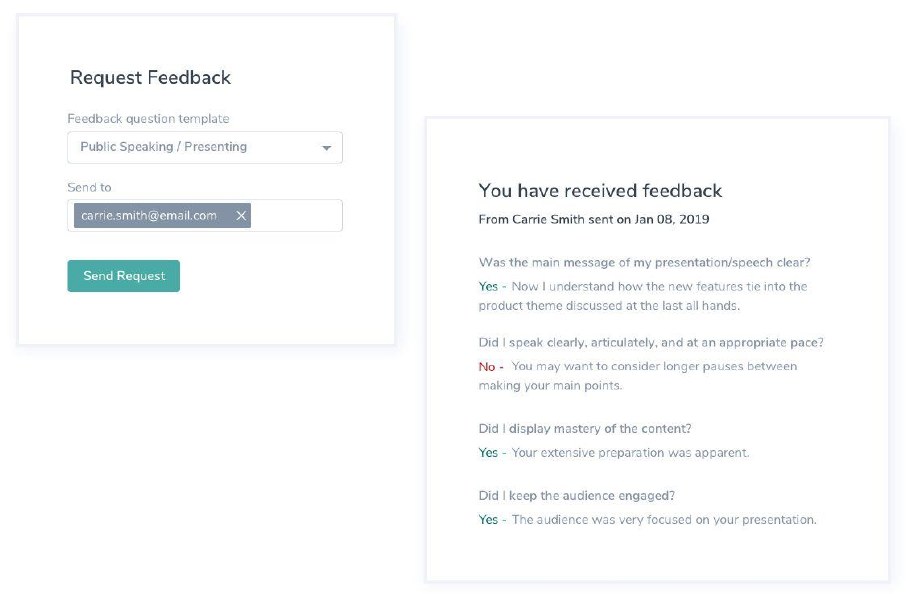
People who care about their careers know they should ask for feedback and track their growth, but it’s hard to keep up. Our first version made feedback easy to request, but people didn’t come back to it.
The first year
Concept to public launch in 10 months
Week 1
Hypotheses
Define what we believe, and the assumptions to test.
Month 1
Prototype
A click-through prototype for concept testing.
Month 2–3
Test and build
Concept tests, contextual inquiry, then design and build the MVP.
Month 5
Alpha
Alpha release to our first users.
Month 6–9
Iterate
Gather feedback and iterate, every week.
Month 10
Launch
Public launch for general access.
How I did it
Research first, then fail fast
We ran 20+ user interviews and recruited people for a month-long study using the product. The goal was to learn quickly, fail fast and keep putting new ideas in front of users.
Three personas emerged from the interviews. All of them were career-driven and saw their growth as their own responsibility.
Enthusiastic Ethan
Clear goals and a plan. Gets feedback often, and is open to tools that help.
Driven Demi
Knows her goals but has no structured plan. Wants help staying on track.
Conscientious Chloe
Motivated by challenges, but can feel overwhelmed about where to focus.
Design evolution
Four experiments to find what stuck
Each round of testing showed us a new problem, and the next design tried to solve it.
Experiment 1
Product stickiness
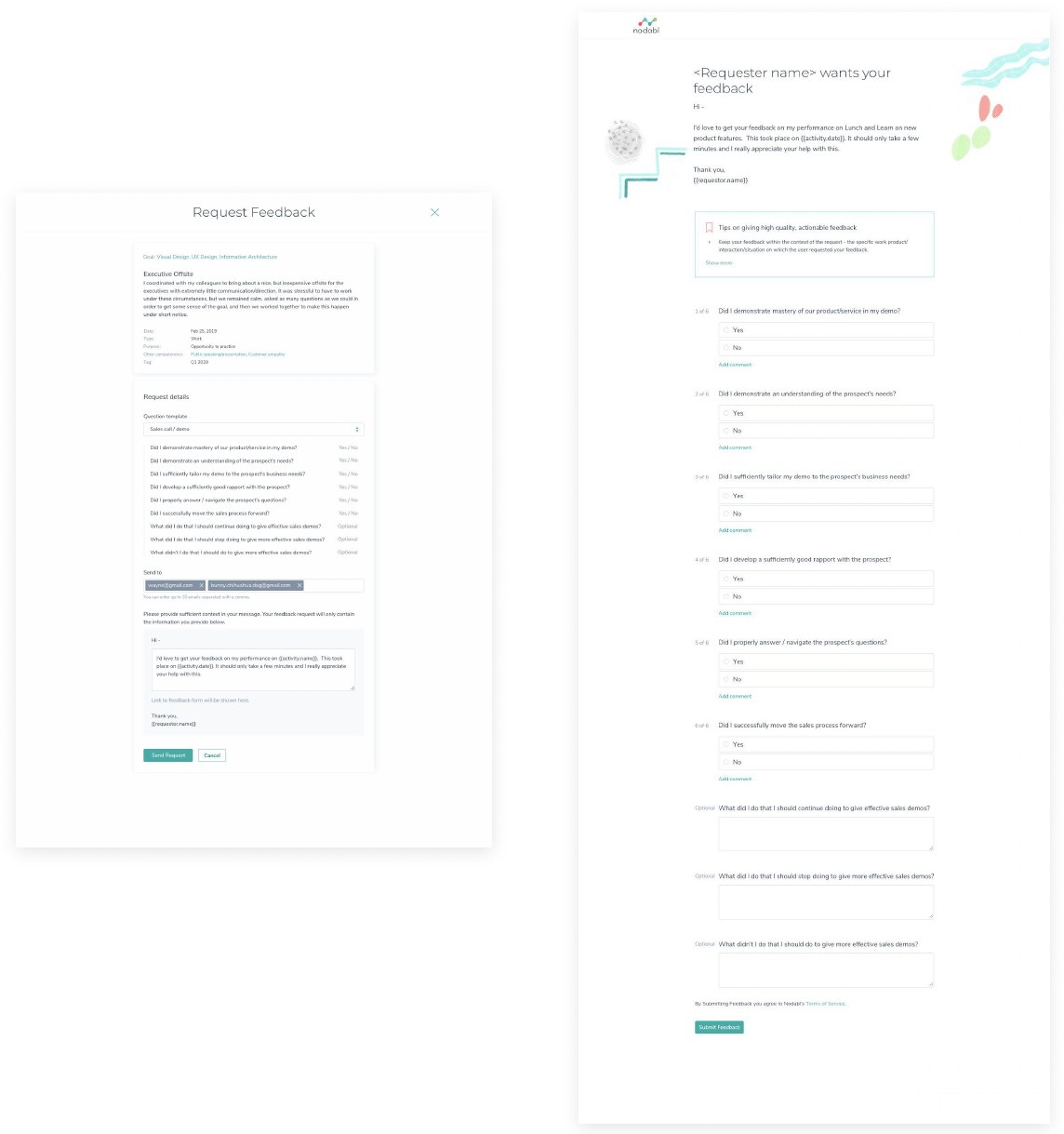
What we saw: as a feedback tool, people didn’t use it regularly.
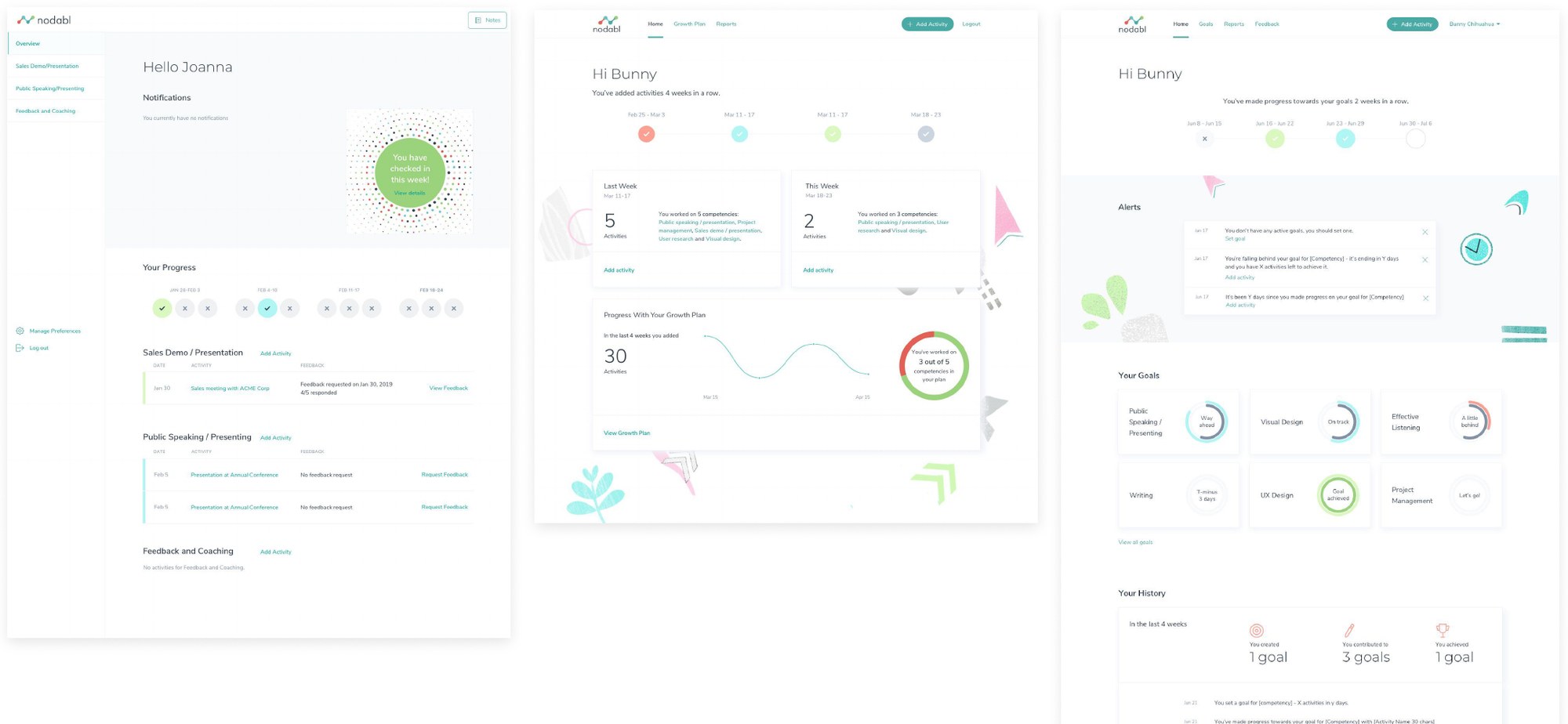
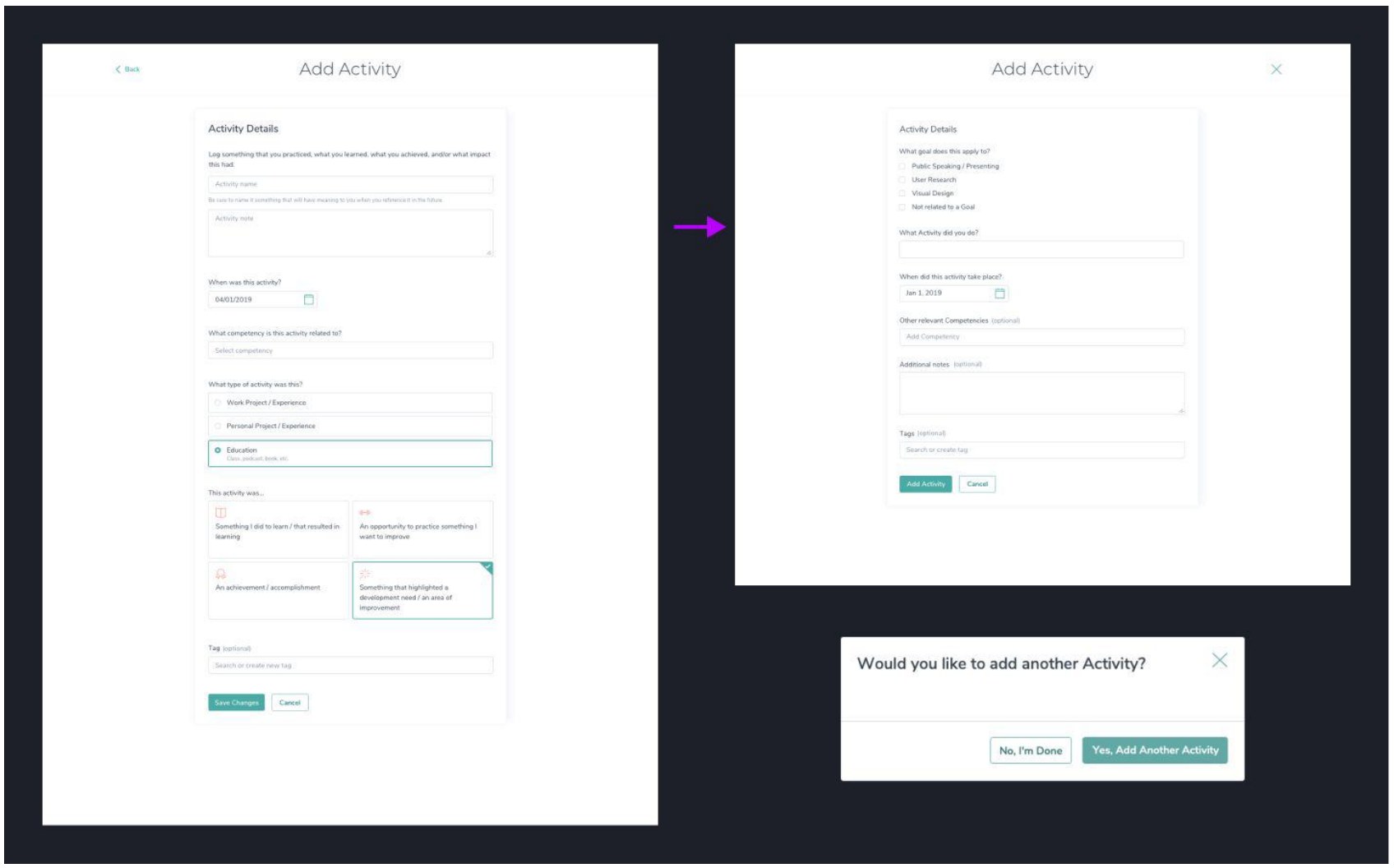
What we tried next: a journaling habit, with a weekly check-in to log activities.
Experiment 2
Reduce cognitive load
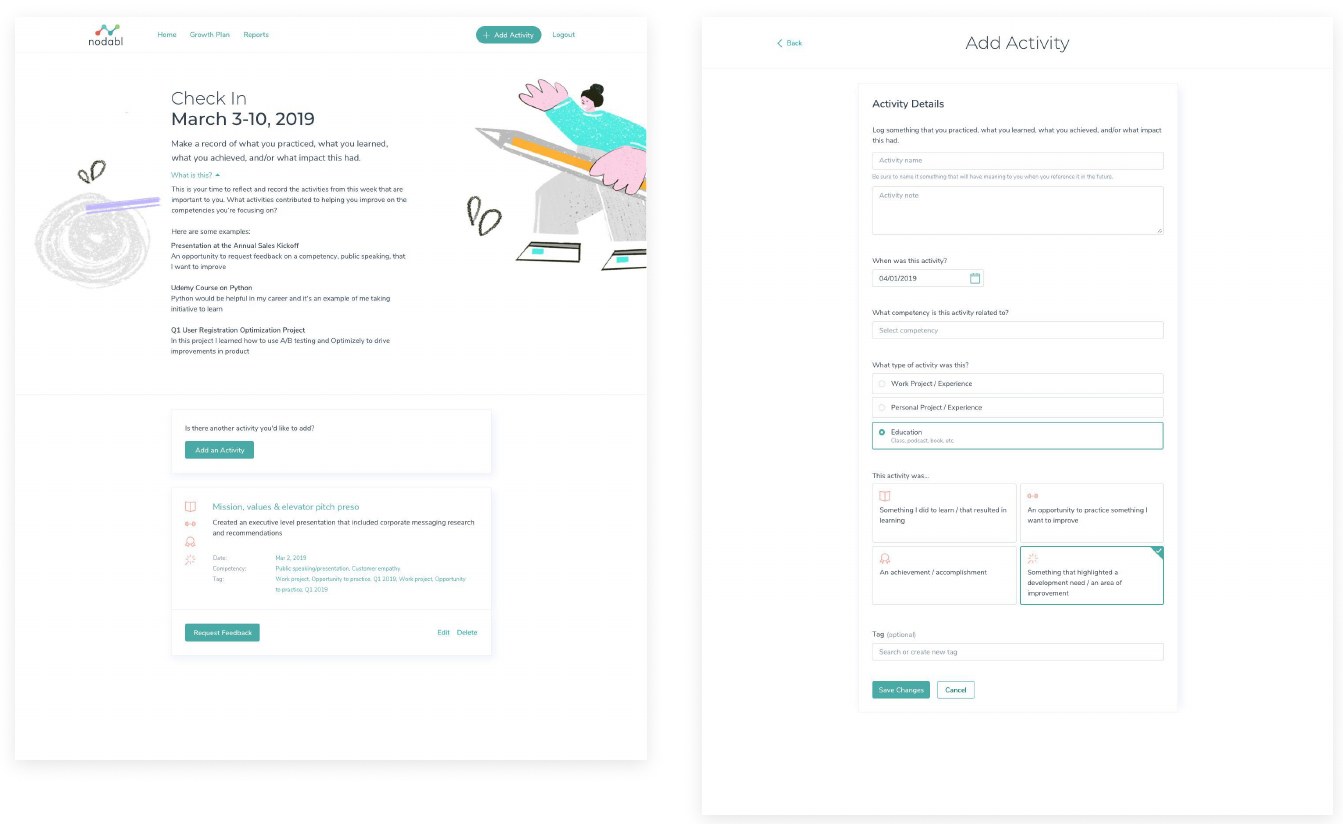
What we saw: people weren’t sure what to write. A blank check-in was too broad.
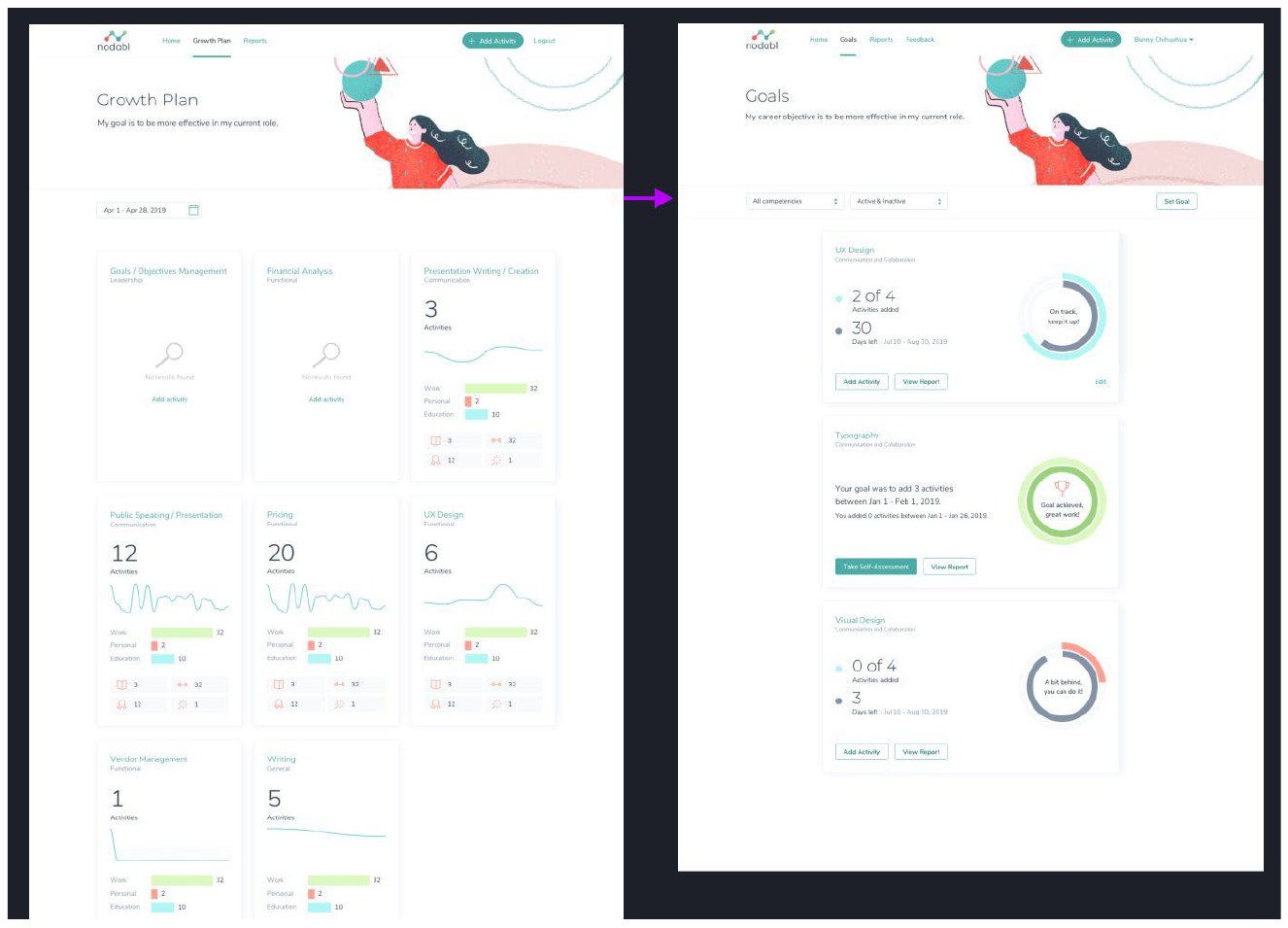
What we tried next: a curated growth plan, with competencies to focus on based on each person’s role.
Experiment 3
Quick wins to reach big goals
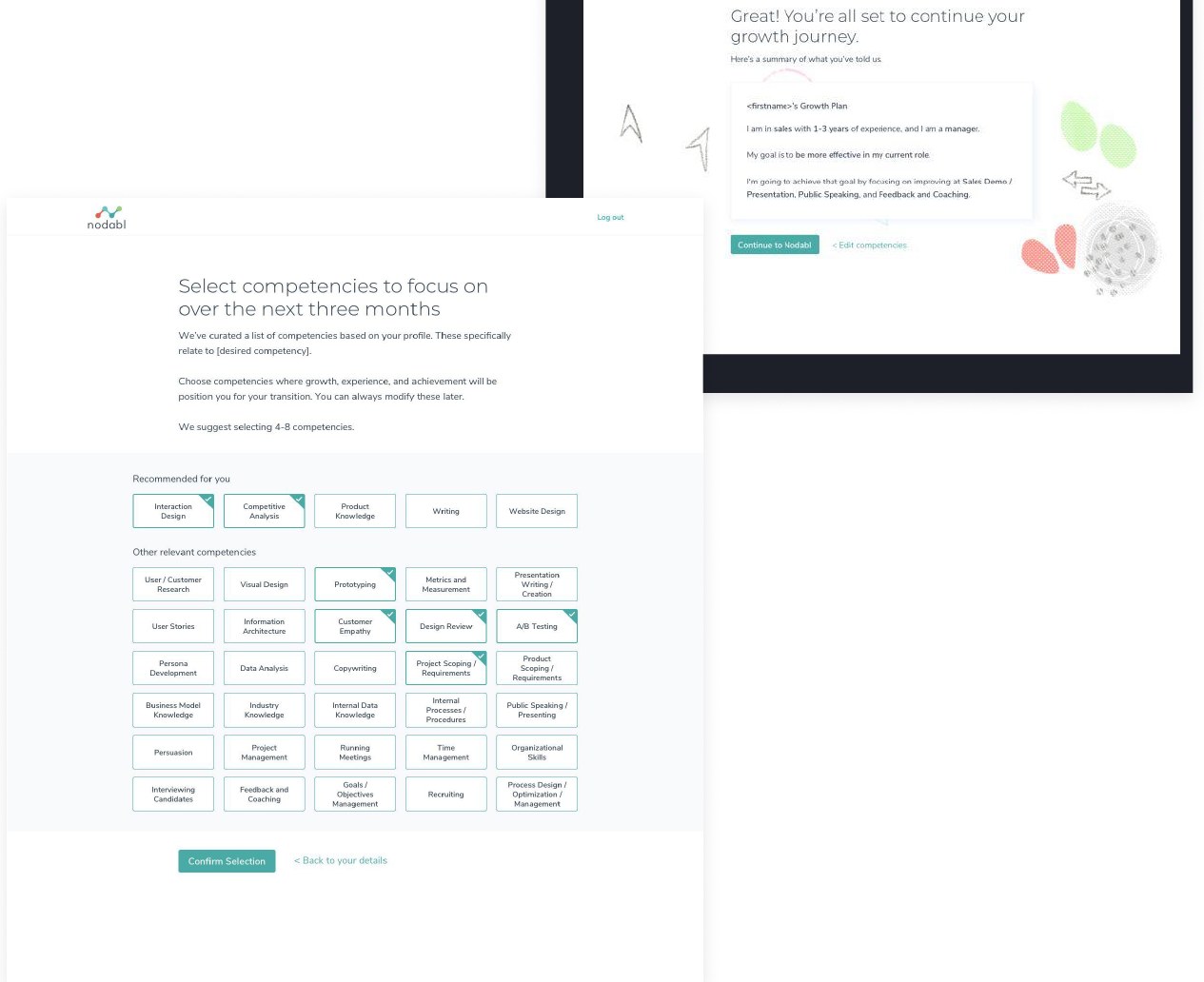
What we saw: people didn’t know when they were “done”.
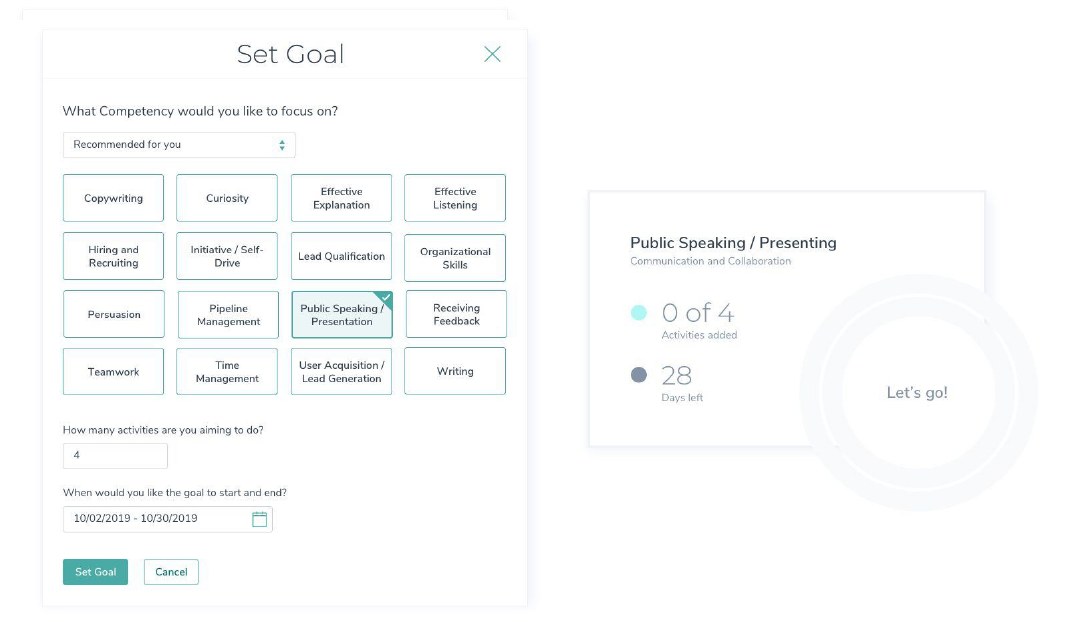
What we tried next: the growth plan became a goal-setting tool, with a number of activities to complete.
Experiment 4
Benchmarking
What we saw: goals gave activities meaning, but a goal means something different to everyone.
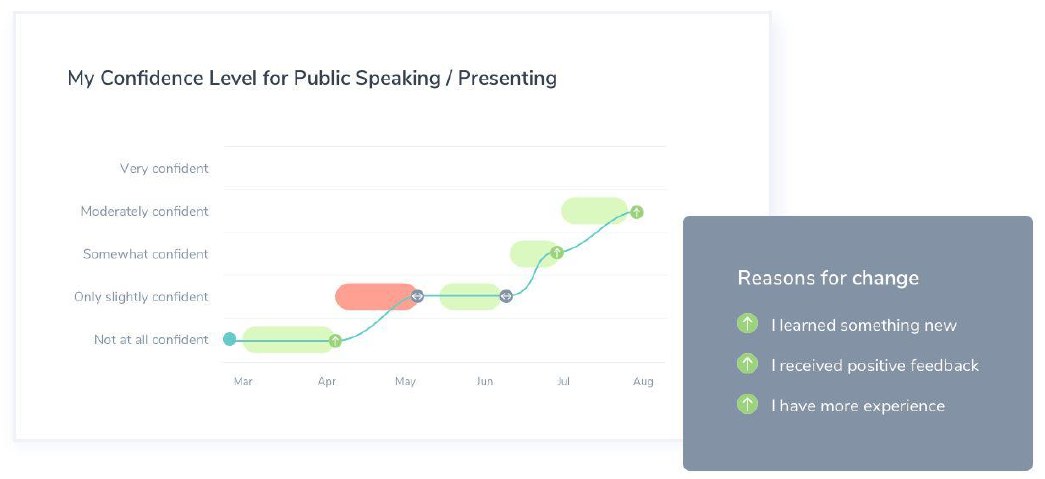
What we tried next: a baseline and self-assessments, so people could measure their own progress.
Public release
A loop of goals, activities and feedback
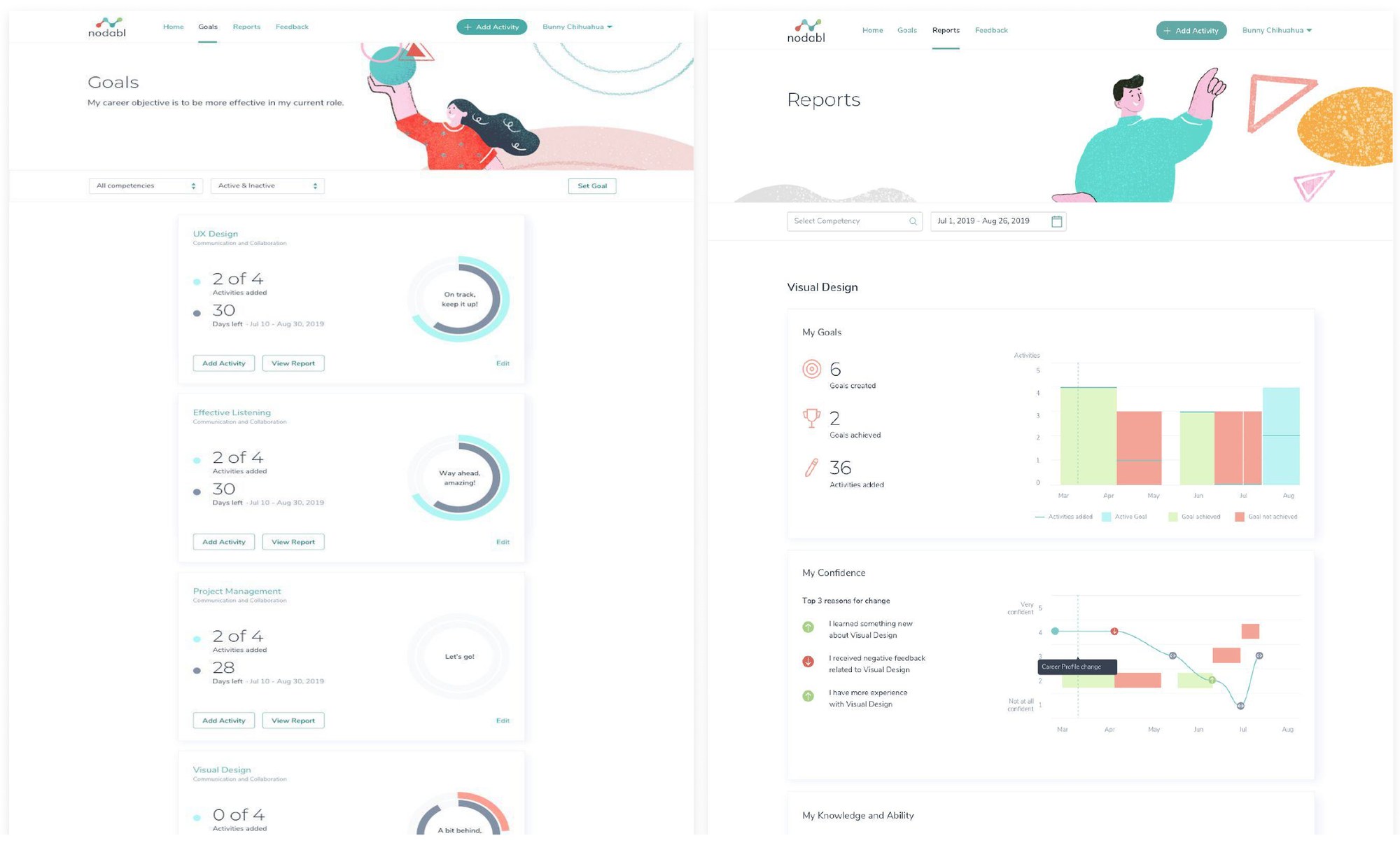
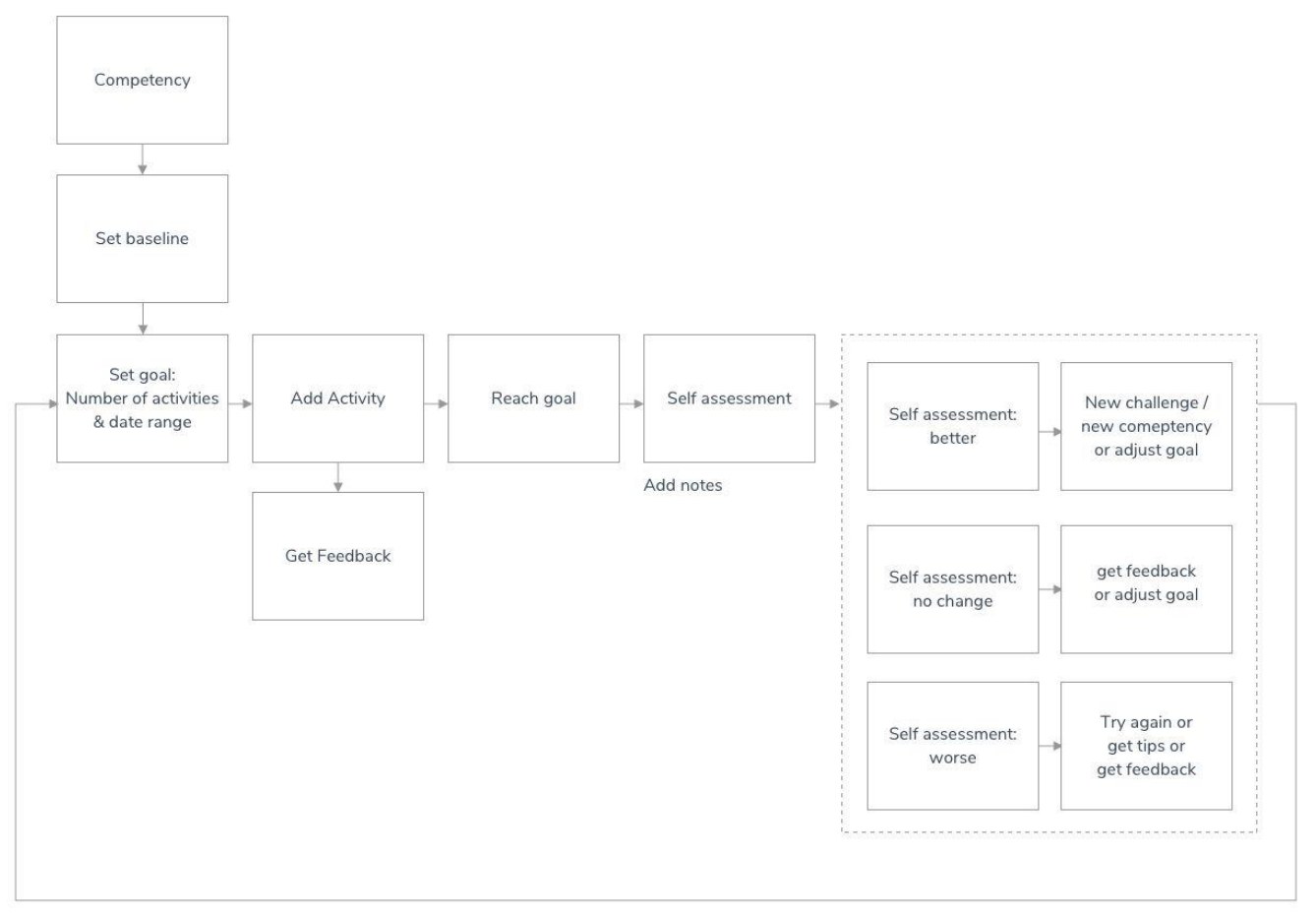
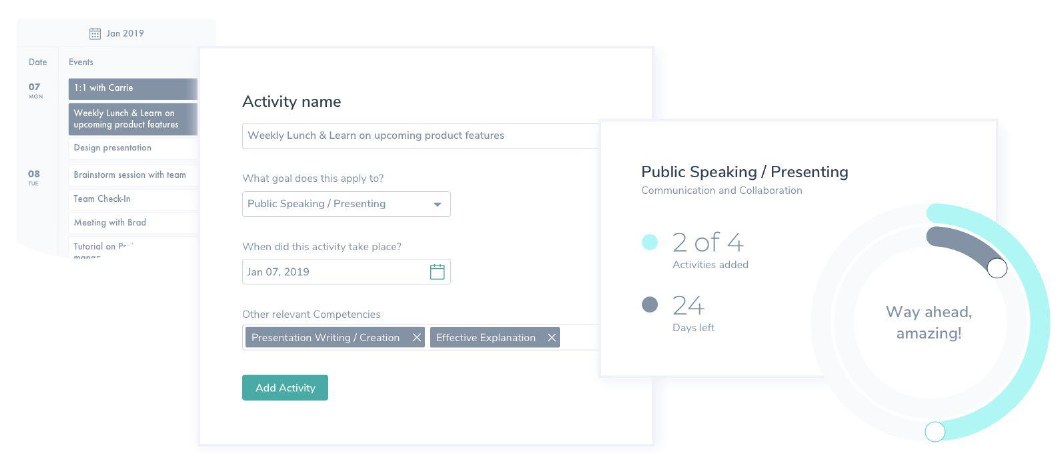
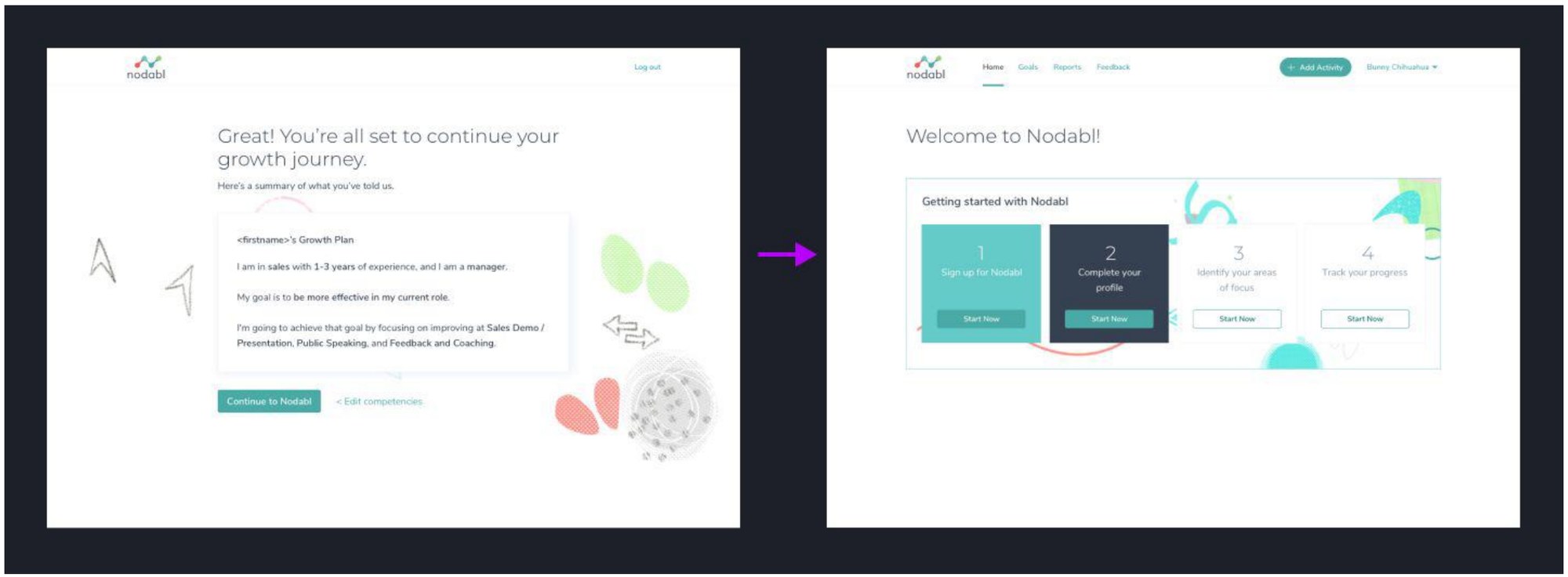
By launch, the product was a simple loop: pick a competency, set a baseline and a goal, add activities, ask for feedback, then assess yourself and choose what’s next.
After launch
What the data told us
In the first five weeks after launch (13 October to 20 November 2019), most people who signed up took action.
122
people signed up
103
took an action
101
set a goal
65
did a self-assessment
Goals had become the heart of the product, and public speaking was the most popular competency. Feedback, the original idea, was now a supporting feature: only 10 people requested it. We kept iterating to make the product quicker to use.
Outcome
- From concept prototype to public launch in 10 months
- Evolved a feedback tool into a goal-setting product, through four rounds of experiments
- Most people who signed up took action: 103 of 122 in the first five weeks
What I took from it: test early and often. Every experiment came from watching what people actually did, not what we assumed they’d do.